

By Gunnar Mühlstädt
SUMMARY
The reduction of fat and sugar is now a key development standard in the food industry.
Consumers expect lower-calorie products – without compromising on creaminess, stability, and enjoyment. Especially in sensitive categories like ice cream, desserts, or plant-based alternatives, traditional reformulation approaches quickly reach their technological limits.
In practice, fat and sugar fulfill not only sensory but also crucial technofunctional tasks: they control emulsion, viscosity, mouthfeel, and freeze stability. If their proportion is reduced, textures become watery, emulsions unstable – and additives often become unavoidable.
This article demonstrates how fresh spirulina can be used as a biological functional system to naturally replace fat and sugar functions. The bioactive exopolymer substances (EPS) matrix takes over tasks that are otherwise performed by animal fats, sugars, or synthetic additives.
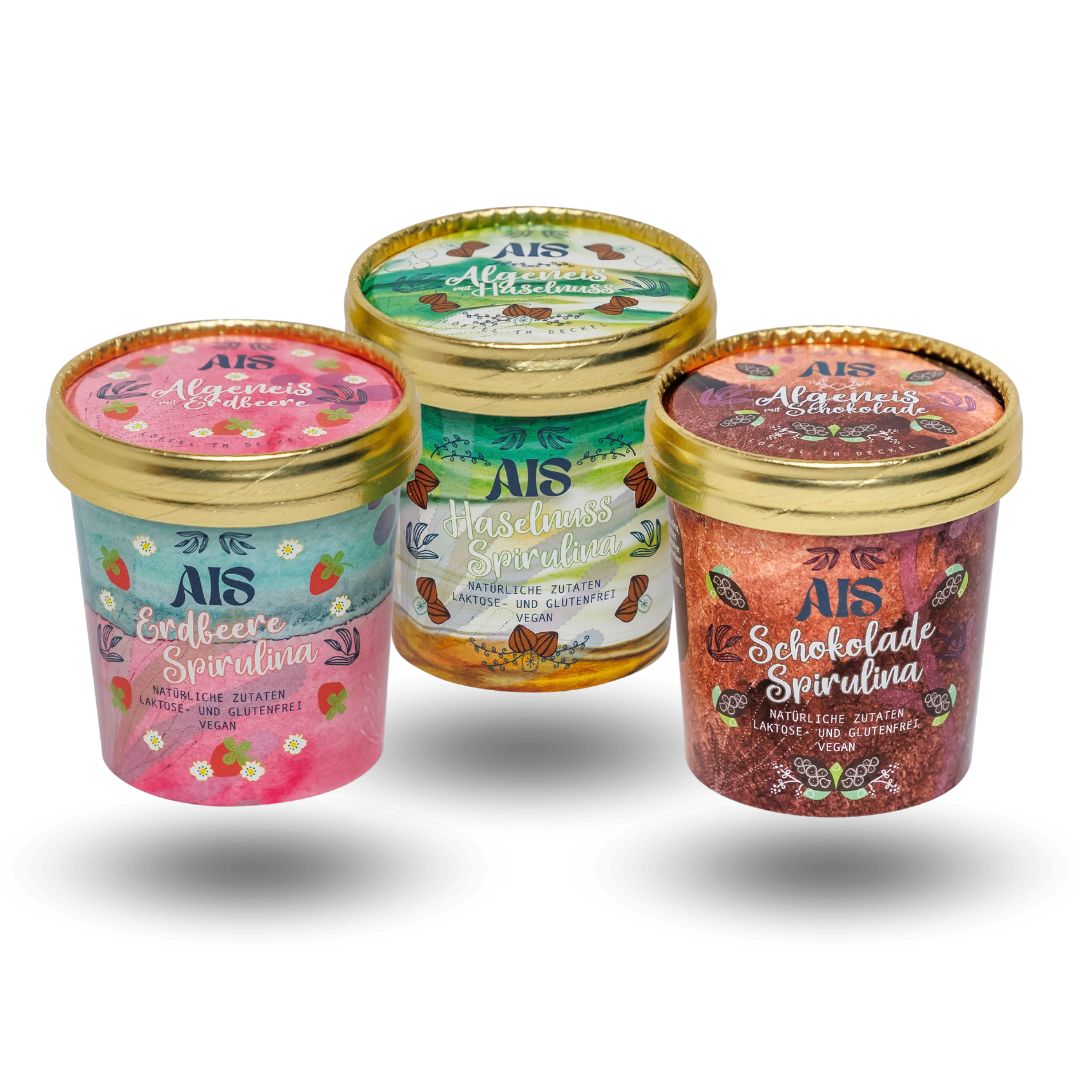
The result: Animal fats are completely replaced (100%), and the sugar content is reduced by up to 30% (product example AIS) – while maintaining creaminess, stable texture, and clean-label compliance. ALGENWERK’s standardized fresh biomass is versatile – from ice cream and desserts to plant-based alternatives, sauces, and fillings.
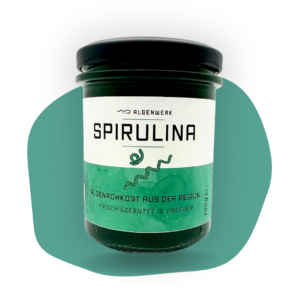
ALGENWERK in Dresden develops sustainably produced, traceable, and legally defined microalgae biomass that can be seamlessly integrated into existing recipes – as a natural, functional ingredient for the next generation of healthy, clean-label products.
Read our following article on this topic now or contact us directly.
About ALGENWERK
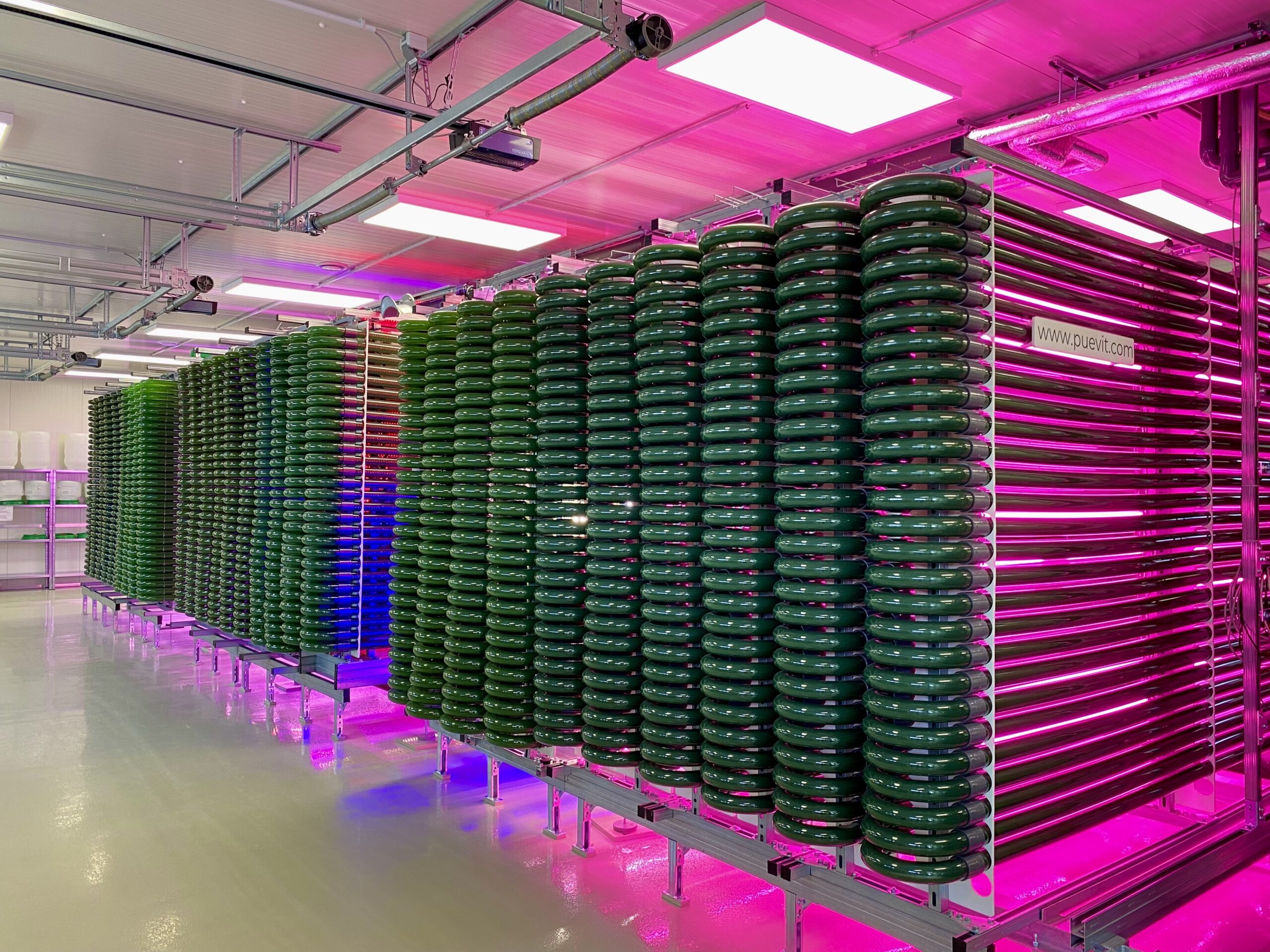
ALGENWERK is the European technology leader for fresh microalgae grown in closed photobioreactors. The company develops sustainably produced, traceable, and legally compliant microalgae biomass that can be seamlessly integrated into existing recipes – as a natural, functional ingredient for the next generation of healthy, clean-label products.
ALGENWERK stands for the highest quality, purity, and process reliability in microalgae production. Production takes place year-round, is standardized, and independent of seasonal fluctuations. Thanks to closed, ultra-pure systems, germ-free, tasteless biomass is produced that is free of pesticides, antibiotics, and additives.
The patented continuous production process guarantees a shelf life of five weeks, unique in the market (compared to approximately one week for conventional fresh algae), while maintaining consistently high nutrient density and sensory stability.
With over ten years of experience in microalgae production technology, ALGENWERK is now the world’s largest supplier of fresh spirulina. ALGENWERK is ISO 9001 certified.

THE CHALLENGE
Why fat and sugar reduction fails technologically
Reducing fat and sugar is no longer a voluntary optimization step, but a technological necessity. Consumers expect fewer calories – without compromising on creaminess, mouthfeel, and enjoyment. Especially in sensitive categories like ice cream, desserts, or plant-based alternatives, classic reformulations quickly reach their limits.
This is because fat and sugar are integral components of a finely balanced system and perform crucial functions:
- Building creaminess and mouthfeel
- Controlling viscosity and structural stability
- Controlling freezing behavior and ice crystal formation
- Modulating aroma perception
In ice cream, these functions are traditionally achieved through high proportions of milk fat, cream, and sugar. Plant-based recipes often use coconut oil, nut bases, and additional emulsifiers and stabilizers.
The system disruption during reduction
Reducing fat or sugar doesn’t mean intervening in isolated recipe parameters, but rather in a complex interplay of physical and sensory interactions.
In practice, this often leads to:
- watery or unstable textures
- uncontrolled ice crystal formation
- loss of mouthfeel and creaminess
- flat flavor perception
- reduced shelf life
To compensate, additional emulsifiers, stabilizers, or thickeners are used – which contradicts the goal of modern, minimalist formulations.
In this article, we’ll show you how to overcome these challenges. Don’t have time to read more right now? No problem: Schedule a free expert consultation with us here to learn more about the potential of fresh spirulina for your products.
CONSEQUENCES FOR R&D-TEAMS
Product development thus faces a structural conflict of objectives:
1. The market and retailers demand less fat, less sugar, and improved nutritional profiles.
2. Simultaneously, the product requires stability, process reliability, and sensory quality.
Fat and sugar reduction is therefore not purely a matter of nutritional value, but a technological challenge that requires new functional raw materials – instead of increasingly complex combinations of additives.
The Solution
BIOLOGICAL FUNCTIONAL MATRIX INSTEAD OF FAT, SUGAR AND ADDITIVES
The conflicting goals – less fat and sugar while maintaining the same creaminess, stability, and enjoyment – are difficult to resolve using traditional reformulation approaches.
This is precisely where ALGENWERK comes in.
Instead of imitating or chemically compensating for the functions of fats and sugars, fresh spirulina biomass is used as a biological functional system – not as a powder, not as a flavoring ingredient, but as an active, fresh structural matrix.
The EPS Matrix: Function through Biological Self-Organization
Fresh spirulina contains an extracellular polysaccharide matrix (EPS) – a finely cross-linked, natural hydrogel. In an aqueous environment, this matrix organizes itself three-dimensionally into a viscoelastic network.
As a result, the EPS matrix performs several technofunctional tasks simultaneously:
• Water binding and viscosity building
• Emulsification and stabilization of fat and water phases
• Structure formation and mouthfeel
• Stability during cooling, freezing, and shear forces
Functions that are otherwise fulfilled by fats, sugars, or synthetic additives.
Fat and sugar reduction without loss of function
This biological functionality allows for:
· complete replacement (100%) of animal fats
· reduction of sugar content by up to 30% (product example: AIS)
· significant reduction or elimination of emulsifiers/stabilizers
– without compromising texture, creaminess, or process stability.
Unlike synthetic additives, the EPS matrix acts dynamically and adaptively: it reacts to temperature, pH value, and mechanical stress, thus stabilizing even complex formulations.
The result is a natural functional complex with:
· creamy, stable texture
· controlled freezing and melting behavior
· neutral sensory profile
· clear labeling (“Spirulina, fresh”)
„In a ganache, the mixture works with fresh spirulina and brings creaminess without additional sugar.“ Sarah Gierig, CEO & Chocolate-Sommelière
Consumer Acceptance – 97 % find fresh Spirulina neutral in taste
A key advantage for its use: Fresh spirulina is sensorially neutral. In blind taste tests conducted by Neubrandenburg University of Applied Sciences (2025), 97% of participants rated its taste as mild or neutral, while dried products were frequently described as bitter. This means that fresh spirulina can be used in higher doses without overpowering the flavor of other ingredients – a crucial requirement for optimizing the Nutri-Score in products that must be both “healthy and delicious”.
„Mein Spirulina-Erlebnis war super. Die frische Alge schmeckt im Vergleich zu Pulver sehr dezent.“ Eva-Maria Straub, Bloggerin, NaturallyRawsome
Did you know? Fresh vs. Powder – why freshness matters
Whether a food retains its nutrients and functions depends not only on its composition but, above all, on how it is processed. This difference is particularly evident with spirulina: While powdered products largely lose their biological activity through drying, fresh biomass remains alive, functional, and sensorially neutral. Fresh spirulina is considered an unprocessed ingredient.
The following overview shows the most important differences.
DISADVANTAGES OF DRIED SPIRULINA IN POWDER FORM | HOW FRESH SPIRULINA SOLVES THIS |
High oxidation level due to drying → loss of sensitive nutrients (vitamins, unsaturated fatty acids) | Freshly cultivated, not heated: Bioactive compounds remain intact, maximum nutrient density and bioavailability. |
Denatured proteins by spray drying | Intact protein structure with complete amino acid profile; higher biological value and better digestibility. |
Low technofunctional activity (weak gel formation, weak emulsifying ability) | Active EPS matrix acts as a natural emulsifier, gelling agent and stabilizer – replaces E471, E415, E407 |
Loss of color and pigments → pale green, reduced optical effect | Phycocyanin and carotenoids remain stable – intense natural color, replaces artificial colors (E131, E102) |
5 DEMONSTRABLE EFFECTS FOR MANUFACTURERS
The use of fresh microalgae – especially fresh spirulina – has a quantifiable impact on product quality, nutritional profile, clean-label suitability, and market success. Real-world development projects demonstrate the following effects:
- 100% replacement of animal fats with stable texture
In ice cream and dessert applications, animal fat (milk, cream) could be completely replaced. The extracellular EPS matrix of fresh spirulina took over key fat functions such as creaminess, mouthfeel, and emulsion stability.
Result: a creamy, homogeneous texture without any loss of sensory qualities – even in frozen applications.

- Sugar reduction of up to 30% without loss of function
Thanks to the water-binding and viscosity-enhancing properties of the EPS matrix, the sugar content in ice cream recipes could be reduced by up to 30% without compromising body, melting behavior, or mouthfeel. Classic technological sugar functions (structure, freezing behavior, mouthfeel) were biologically replaced – without additional stabilizers.
- Fewer Additives & More Stable Recipes
Thanks to the functional contribution of fresh microalgae, emulsifiers and stabilizers could be significantly reduced or completely replaced.
In development projects, up to 70% of previously used additives were eliminated. The result is more robust recipes, less dependence on additive systems, and clearer labeling.
Improved Nutritional Profile with Consistent Taste
The combination of reduced fat and sugar with a simultaneous increase in protein and fiber led to a measurably improved nutritional profile.
In the described ice cream project, a Nutri-Score of B was calculated – despite the indulgent product category. Fewer calories, less saturated fat, without compromising sensory quality.

5. High Sensory Acceptance & Process Reliability
A crucial practical factor is the resolution of the taste issue. In blind taste tests conducted by Neubrandenburg University of Applied Sciences (2025), 97% of participants rated fresh spirulina as mild or neutral – in stark contrast to powdered products.
The fresh biomass could be dosed in higher amounts without producing an off-flavor – while maintaining stable processes and reproducible results.
CONCLUSION
Fresh microalgae combine technological function, sensory neutrality, and regulatory safety. Manufacturers can use them to develop stable, clean, and simultaneously brand-strengthening formulations – scientifically validated and field-tested.
Feel free to contact us if you would like to learn more about your application options with fresh spirulina.
Frequently Asked Questions:
Typical objections to fresh microalgae – and why they have long been resolved in practice
Costs & Profitability: Compared to conventional additives, the raw material costs of fresh microalgae are initially higher. However, these expenses balance out in the overall analysis – or even become profitable: Improving the Nutri-Score, saving on synthetic additives, and achieving premium positioning in the clean-label segment result in a clear return on investment. According to NielsenIQ (2024), products that improve a Nutri-Score level have up to a 25% higher purchase probability – a direct economic effect that significantly outweighs the additional raw material costs.
Process Integration & Application: Fresh microalgae do not require completely new production facilities, but rather a precise understanding of dosage, pH stability, and temperature control. ALGENWERK provides pilot batches, supports recipe adjustments, and offers application support in all areas. The goal is always to enable integration without structural changes – pragmatically, safely, and reproducibly.
Logistics & Shelf Life: The biomass is delivered chilled and remains stable for up to five weeks. All batches are produced with full traceability, microbiologically tested, and accompanied by clear shelf-life documentation. This ensures that the fresh biomass meets the established quality and hygiene standards of the food industry and can be seamlessly integrated into existing supply chain processes.
Regulatory & Legal Compliance: Spirulina (Limnospira sp.) is approved as a foodstuff in the EU and is not subject to the Novel Food Regulation (EU) 2015/2283. Its use in food is therefore legally permissible. ALGENWERK provides all relevant specifications, certificates, and documentation upon request to support approval and audit processes.
In short: The challenges are solvable – and the advantages clearly outweigh them. Fresh microalgae do not require a change of thinking in terms of risk, but rather in terms of opportunity: the next step towards a naturally functioning, economically viable and regulatory-compliant product generation.
WOULD YOU LIKE TO ASSESS THE POTENTIAL USES OF FRESH SPIRULINA FOR YOUR PRODUCTS? CONTACT OUR TEAM OF EXPERTS HERE OR REQUEST A FREE SAMPLE.

Gunnar Mühlstädt
Engineer and innovator at PUEVIT GmbH (ALGENWERK)
He combines biotechnology and food technology.
His mission: not to replace food, but to improve it with natural, functional raw materials that simultaneously support a sustainable future.