
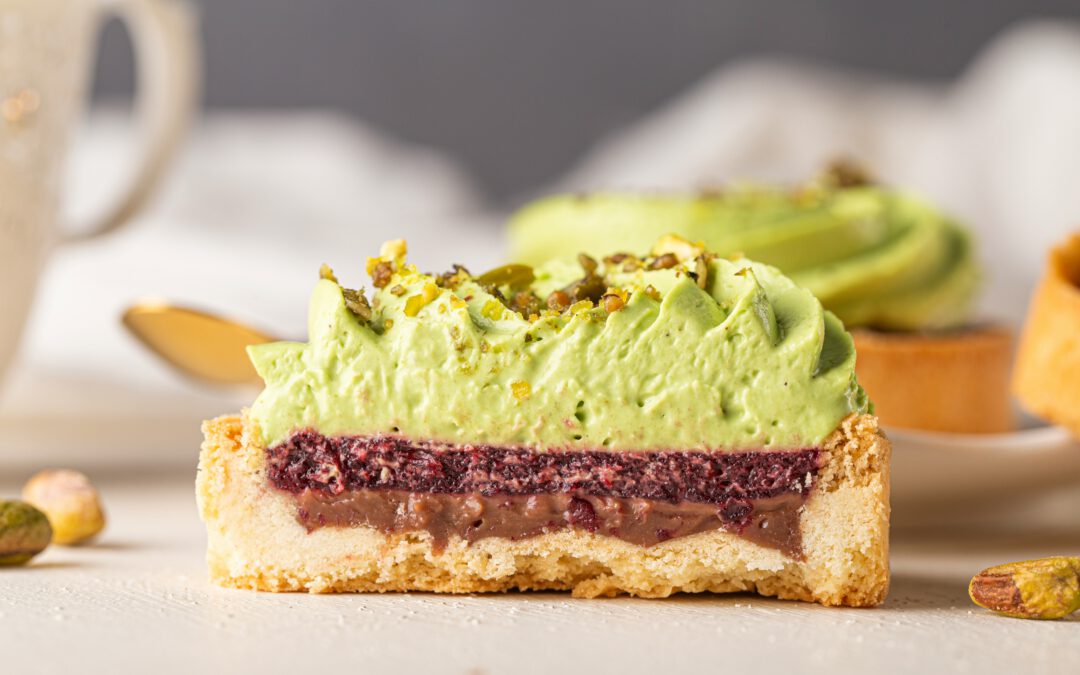
HOW SPIRULINA’S EPS MATRIX REPLACES EMULSIFIERS, STABILIZERS AND COLORS – AND KEEPS FORMULAS CLEAN, STABLE AND SENSORYLY CONVINCING.
Summary
Fresh Microalgae as the Key to Clean Label
Clean label has become the industry standard: short ingredient lists, easily understandable raw materials – without E-numbers. In practice, many reformulations fail because emulsion, stability, color, and mouthfeel suffer without additives.
Fresh microalgae, especially Spirulina (Limnospira sp.), provide a bioactive EPS matrix (extracellular polysaccharides) that performs technofunctional tasks for which emulsifiers (e.g., E471), thickeners/gelling agents (e.g., E415/E407), or colorings (e.g., E131/E102) would otherwise be needed. The result: natural stability and texture – with clean labeling and a sensorially neutral profile.
ALGENWERK’s standardized fresh biomass can be used in numerous food categories – from plant-based alternatives, dressings, and spreads to desserts, chocolate, and ice cream. This allows for additive reduction without compromising on technology.
ALGENWERK develops sustainably produced, traceable and legally defined microalgae biomass that can be seamlessly integrated into existing recipes – as a natural, functional ingredient for the next generation of healthy clean-label products.
Read our following article on this topic now or contact us directly.
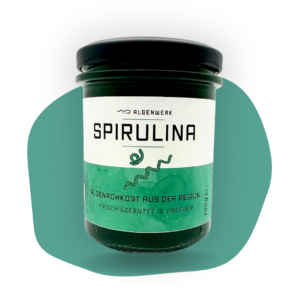
About ALGENWERK
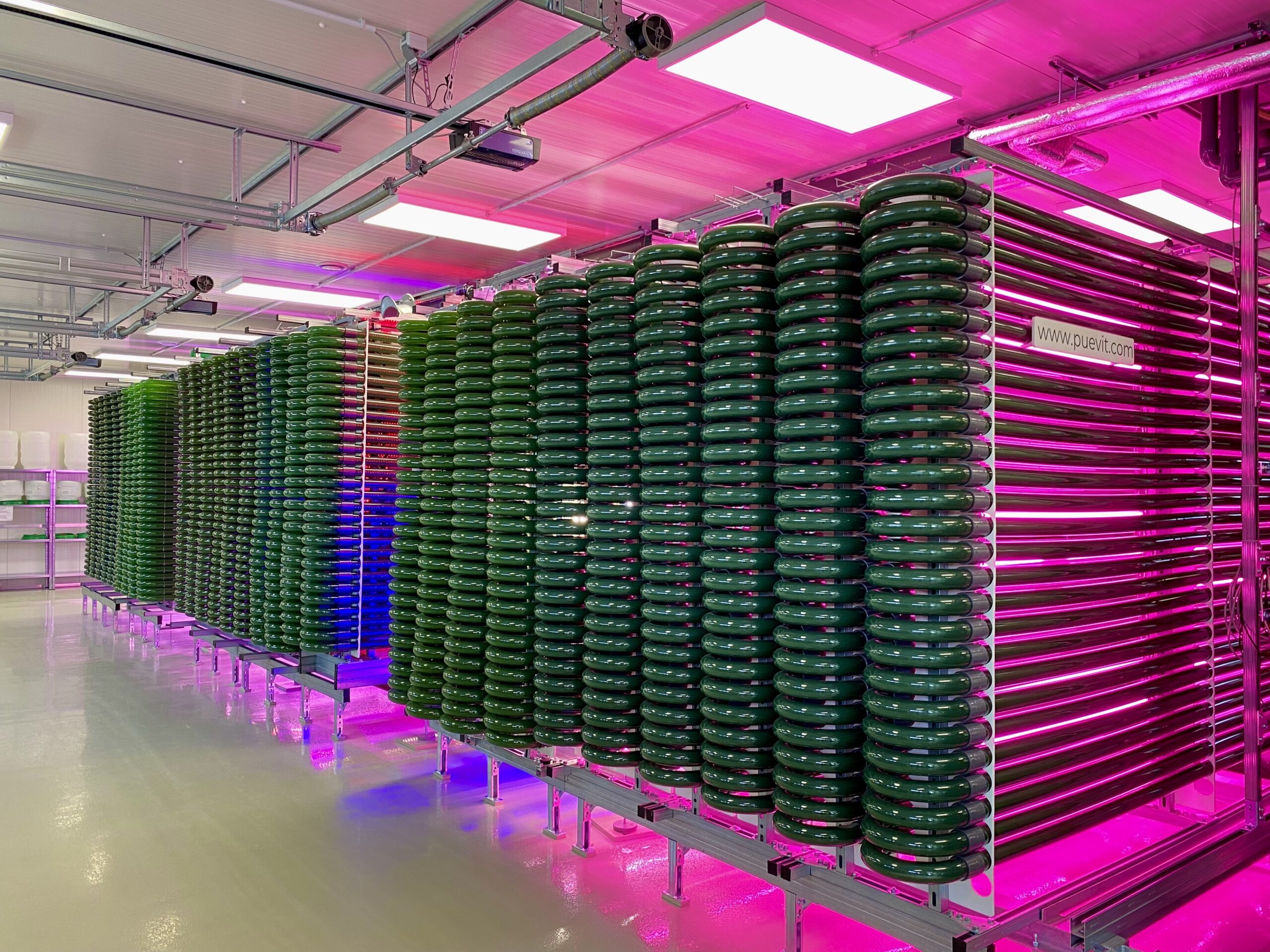
ALGENWERK is the European technology leader for fresh microalgae grown in closed photobioreactors. The company develops sustainably produced, traceable, and legally compliant microalgae biomass that can be seamlessly integrated into existing recipes – as a natural, functional ingredient for the next generation of healthy, clean-label products.
ALGENWERK stands for the highest quality, purity, and process reliability in microalgae production. Production takes place year-round, is standardized, and independent of seasonal fluctuations. Thanks to closed, ultra-pure systems, germ-free, tasteless biomass is produced that is free of pesticides, antibiotics, and additives.
The patented continuous production process guarantees a shelf life of five weeks, unique in the market (compared to approximately one week for conventional fresh algae), while maintaining consistently high nutrient density and sensory stability.
With over ten years of experience in microalgae production technology, ALGENWERK is now the world’s largest supplier of fresh spirulina. ALGENWERK is ISO 9001 certified.

The Challenge
Clean label without loss of function
Clean labeling is far more than just a trend. For manufacturers, it means a fundamental reformulation of their product development – away from additives and towards short ingredient lists and clear declarations. But what sounds simple in theory quickly becomes a technological challenge in practice.
The reason:
- Many industrially proven formulas are based on additives that have been precisely calibrated over decades.
- Emulsifiers ensure stability between the fat and water phases.
- Stabilizers and thickeners (e.g., E415, E407) provide structure, viscosity, and mouthfeel.
- Colorings create visual appeal and brand consistency.
Removing these substances disrupts a finely balanced system of physical and sensory interactions.
This often leads to:
- unstable emulsions, phase separation, and a watery texture,
- uneven viscosity or sedimentation,
- visually pale, unappetizing products,
- and a reduction in taste, mouthfeel, or shelf life.
As a result, food designers and R&D teams are caught between two conflicting demands:
Consumers and retailers demand products “without E-numbers”—while production simultaneously requires process stability, shelf life, and cost-effectiveness.
According to Innova Market Insights (2024):
- 78% of consumers want “ingredients they understand.”
- 62% of new product relaunches make clean-label promises.
- However, only 17% of reformulations remain stable and sensorially consistent.
- Achieving clean labeling is not a marketing problem, but an engineering challenge.
- It requires new raw materials that possess biological functionality – without chemical additives, but with the same stabilizing effects.
In this article, we’ll show you how to overcome these challenges. Don’t have time to read more right now? No problem: Schedule a free expert consultation with us here to learn more about the potential of fresh spirulina for your products.
The Solution
BIOLOGICAL FUNCTION MATRIX INSTEAD OF CHEMICAL ADDITIVES
Fresh spirulina provides an extracellular polysaccharide matrix (EPS) – a finely cross-linked, natural hydrogel that behaves like a functional additive in formulations, but is purely biological in origin.
This matrix consists of complex sugar polymers that cross-link three-dimensionally in an aqueous environment. This forms a viscoelastic network that binds water, stabilizes oil and fat phases, and builds texture – all without chemical emulsifiers or stabilizers.
Unlike synthetic additives, the EPS matrix is multifunctional and dynamic: It reacts to temperature, pH, and shear forces, thereby stabilizing variable formulations – from plant-based drinks to desserts – while simultaneously improving the mouthfeel and homogeneity of the products.
Colorings and binders become unnecessary because the EPS matrix is naturally pigmented and combines emulsifying and thickening properties.
Thus, functionality arises from biological self-organization, not from chemical composition.
The result: a natural functional complex that was previously only achievable through several synthetic additives – with clear labeling (“fresh spirulina”) and high consumer acceptance as a clean-label ingredient.
Did you know? Fresh vs. Powder – why freshness matters
Whether a food retains its nutrients and functions depends not only on its composition but, above all, on how it is processed. This difference is particularly evident with spirulina: While powdered products largely lose their biological activity through drying, fresh biomass remains alive, functional, and sensorially neutral. Fresh spirulina is considered an unprocessed ingredient.
The following overview shows the most important differences.
DISADVANTAGES OF DRIED SPIRULINA IN POWDER FORM | HOW FRESH SPIRULINA SOLVES THIS |
High oxidation level due to drying → loss of sensitive nutrients (vitamins, unsaturated fatty acids) | Freshly cultivated, not heated: Bioactive compounds remain intact, maximum nutrient density and bioavailability. |
Denatured proteins by spray drying | Intact protein structure with complete amino acid profile; higher biological value and better digestibility. |
Low technofunctional activity (weak gel formation, weak emulsifying ability) | Active EPS matrix acts as a natural emulsifier, gelling agent and stabilizer – replaces E471, E415, E407 |
Loss of color and pigments → pale green, reduced optical effect | Phycocyanin and carotenoids remain stable – intense natural color, replaces artificial colors (E131, E102) |
Consumer Acceptance – 97 % find fresh Spirulina neutral in taste
A key advantage for its use: Fresh spirulina is sensorially neutral. In blind taste tests conducted by Neubrandenburg University of Applied Sciences (2025), 97% of participants rated its taste as mild or neutral, while dried products were frequently described as bitter. This means that fresh spirulina can be used in higher doses without overpowering the flavor of other ingredients – a crucial requirement for optimizing the Nutri-Score in products that must be both “healthy and delicious”.
„My spirulina experience was great. The fresh algae has a very subtle taste compared to the powder.“ Eva-Maria Straub, Blogger, NaturallyRawsome
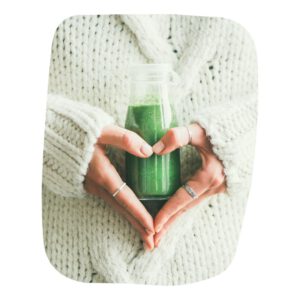
Application Examples: Fresh Spirulina in Ice Cream & Smoothies
Fresh spirulina has proven its worth in development projects for both chilled and frozen applications – especially in fruit smoothies and dairy-free ice cream recipes. In both product categories, the Nutri-Score was measurably improved without compromising taste, color, or texture.
Fresh spirulina was used to reduce fat and stabilize texture; 20% of the previous coconut fat base was replaced. The total fat content decreased from 7.2 g to 4.1 g/100 g, while the protein content increased by 1.6 g/100 g. Result: Nutri-Score improved from C to A – with unchanged creaminess and no ice crystal formation. The natural emulsifying effect of the polysaccharides from the spirulina matrix stabilized the product, eliminating the need for synthetic stabilizers.
fresh biomass in a base of apple and banana puree increased the protein content (+1.1 g/100 ml) and the natural dietary fiber from the EPS matrix. The Nutri-Score improved from D to B. Sensory panels conducted by Neubrandenburg University of Applied Sciences (2025) confirmed: no perceptible off-flavors, natural color intensity, and stable viscosity even after refrigeration.
Both applications demonstrate that fresh microalgae are functional nutrient carriers and, at the same time, technological structural components – enabling reformulations that significantly improve both the Nutri-Score and the clean label profile.
Results
5 Demonstrable Benefits for Manufacturers
The use of fresh microalgae has multiple, quantifiable positive effects on product quality, labeling, and market success.
Improved Nutri-Score:
Even with a 30–40% fresh spirulina content, a food product’s Nutri-Score can be improved by up to two levels – e.g., from D to B. This is due to its high protein and fiber density, low fat content, and simultaneously high proportion of micronutrients. With just a few adjustments, recipes can be improved from an average to a significantly healthier rating.

Increased Purchase Probability:
This optimization also pays off economically. According to NielsenIQ (2024), consumer purchase probability increases by up to 25% when a product’s Nutri-Score improves by just one level. Manufacturers who actively improve their score not only achieve regulatory compliance and brand trust but also demonstrably increase their sales opportunities. Clean label declarations not only increase consumer trust but also facilitate listings and communication in the B2B sector.
Fewer additives requiring declaration:
Thanks to the natural EPS matrix of microalgae, up to 70% of previously used stabilizers and emulsifiers can be eliminated. This significantly simplifies the ingredient list and strengthens the clean label profile – a key competitive factor in modern food production.

Higher micronutrient content:
Fresh spirulina also significantly increases the nutritional value of the final product. In analyses conducted by Neubrandenburg University of Applied Sciences (2025), products formulated with fresh biomass showed up to 80% higher levels of vitamins and carotenoids than comparable products with powder additives. This increased biological activity not only improves the nutritional information but also the health-related brand promise. Incidentally: The phycocyanin and carotenoid pigments contained in spirulina produce stable, natural colors. They are pH-stable in the range of 3 to 7 and retain their intensity even with moderate heat treatment below 65 °C.

Sensory Acceptance & Taste:
A crucial advantage for practical application is the solved taste problem. Previous powdered products were often described as bitter or grassy – this problem is eliminated with fresh spirulina. In blind taste tests conducted by Neubrandenburg University of Applied Sciences (2025), 97% of participants rated the taste as mild or neutral. This means that, for the first time, spirulina can be used in higher doses without overpowering the taste of other ingredients – a crucial prerequisite for combining health and enjoyment.
CONCLUSION
Fresh microalgae combine technological function, sensory neutrality, and regulatory safety.
Manufacturers can use them to develop stable, clean, and brand-enhancing formulations – scientifically validated and field-tested.
Frequently Asked Questions:
Typical objections to fresh microalgae – and why they have long been resolved in practice
Costs & Profitability: Compared to conventional additives, the raw material costs of fresh microalgae are initially higher. However, these expenses balance out in the overall analysis – or even become profitable: Improving the Nutri-Score, saving on synthetic additives, and achieving premium positioning in the clean-label segment result in a clear return on investment. According to NielsenIQ (2024), products that improve a Nutri-Score level have up to a 25% higher purchase probability – a direct economic effect that significantly outweighs the additional raw material costs.
Process Integration & Application: Fresh microalgae do not require completely new production facilities, but rather a precise understanding of dosage, pH stability, and temperature control. ALGENWERK provides pilot batches, supports recipe adjustments, and offers application support in all areas. The goal is always to enable integration without structural changes – pragmatically, safely, and reproducibly.
Logistics & Shelf Life: The biomass is delivered chilled and remains stable for up to five weeks. All batches are produced with full traceability, microbiologically tested, and accompanied by clear shelf-life documentation. This ensures that the fresh biomass meets the established quality and hygiene standards of the food industry and can be seamlessly integrated into existing supply chain processes.
Regulatory & Legal Compliance: Spirulina (Limnospira sp.) is approved as a foodstuff in the EU and is not subject to the Novel Food Regulation (EU) 2015/2283. Its use in food is therefore legally permissible. ALGENWERK provides all relevant specifications, certificates, and documentation upon request to support approval and audit processes.
In short: The challenges are solvable – and the advantages clearly outweigh them. Fresh microalgae do not require a change of thinking in terms of risk, but rather in terms of opportunity: the next step towards a naturally functioning, economically viable and regulatory-compliant product generation.
WOULD YOU LIKE TO ASSESS THE POTENTIAL USES OF FRESH SPIRULINA FOR YOUR PRODUCTS? CONTACT OUR TEAM OF EXPERTS HERE OR REQUEST A FREE SAMPLE.

Gunnar Mühlstädt
Engineer and innovator at PUEVIT GmbH (ALGENWERK)
He combines biotechnology and food technology.
His mission: not to replace food, but to improve it with natural, functional raw materials that simultaneously support a sustainable future.