
Our planet is blue.
A large part of its food chain begins in water. Microalgae turn CO₂, light, water and nutrients into valuable biomass – and have done so for billions of years.
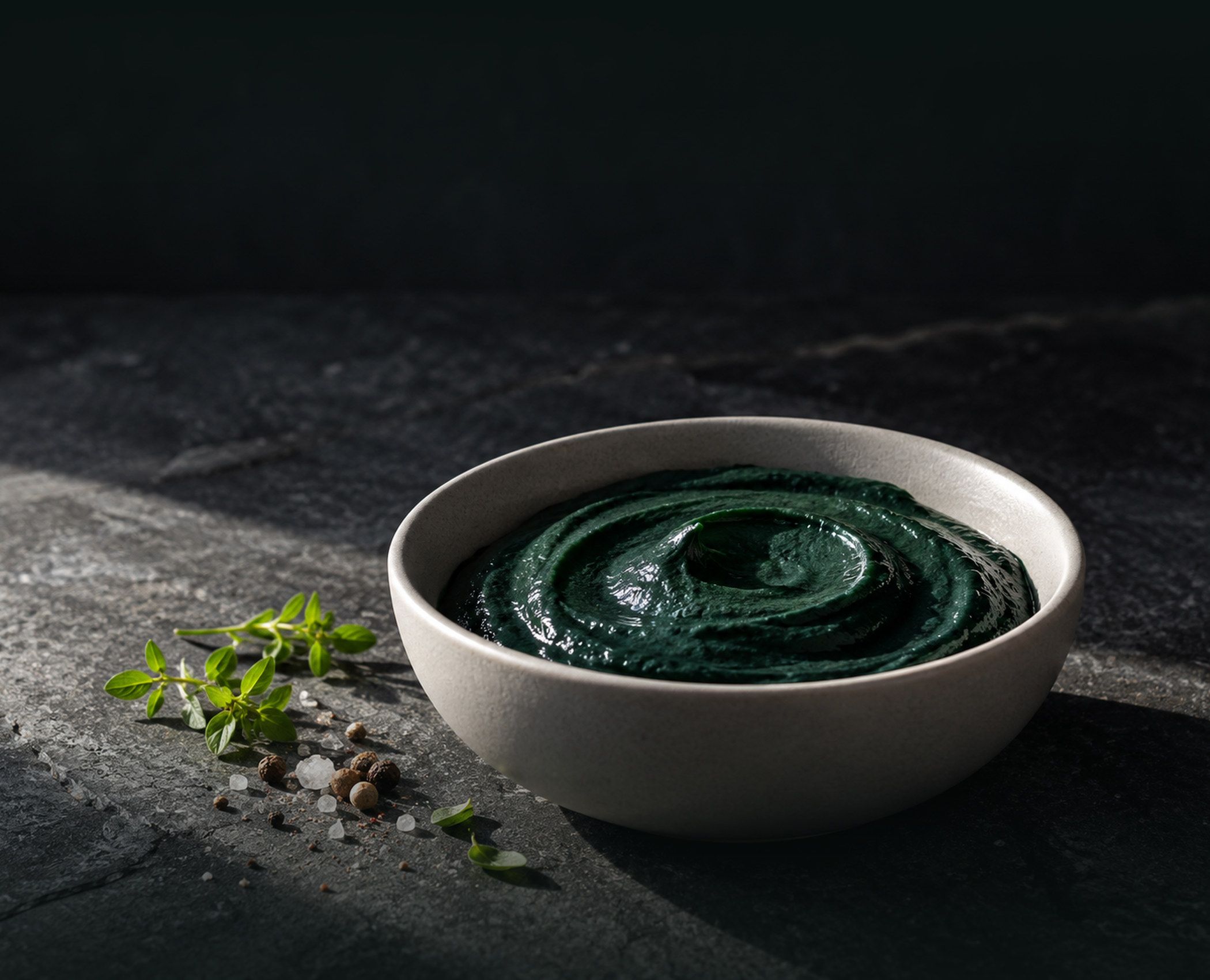
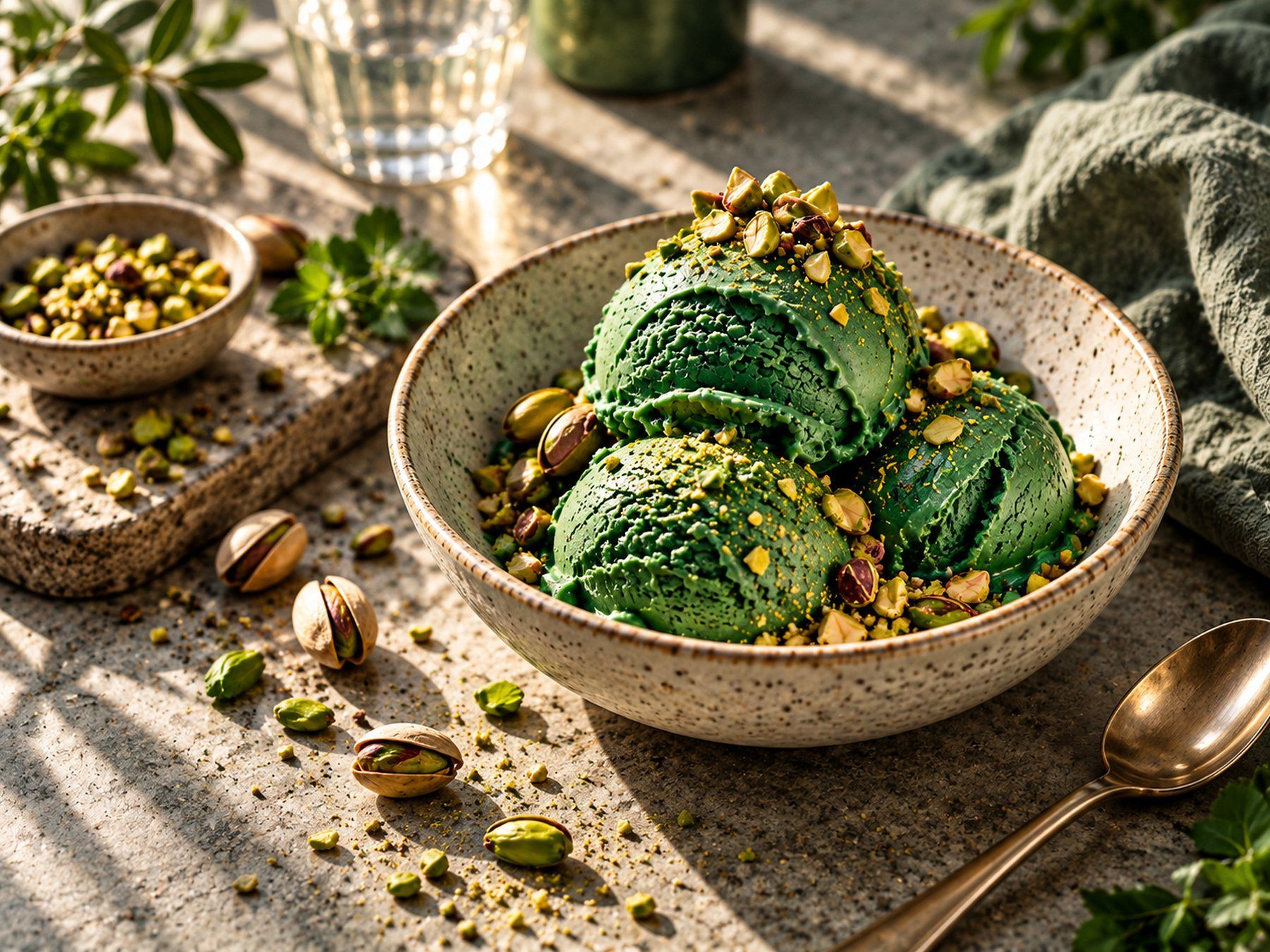
Illustrative image
We bring this principle into the city.
ALGENWERK turns it into food that offers sustainable, nutritionally relevant and functional added value.
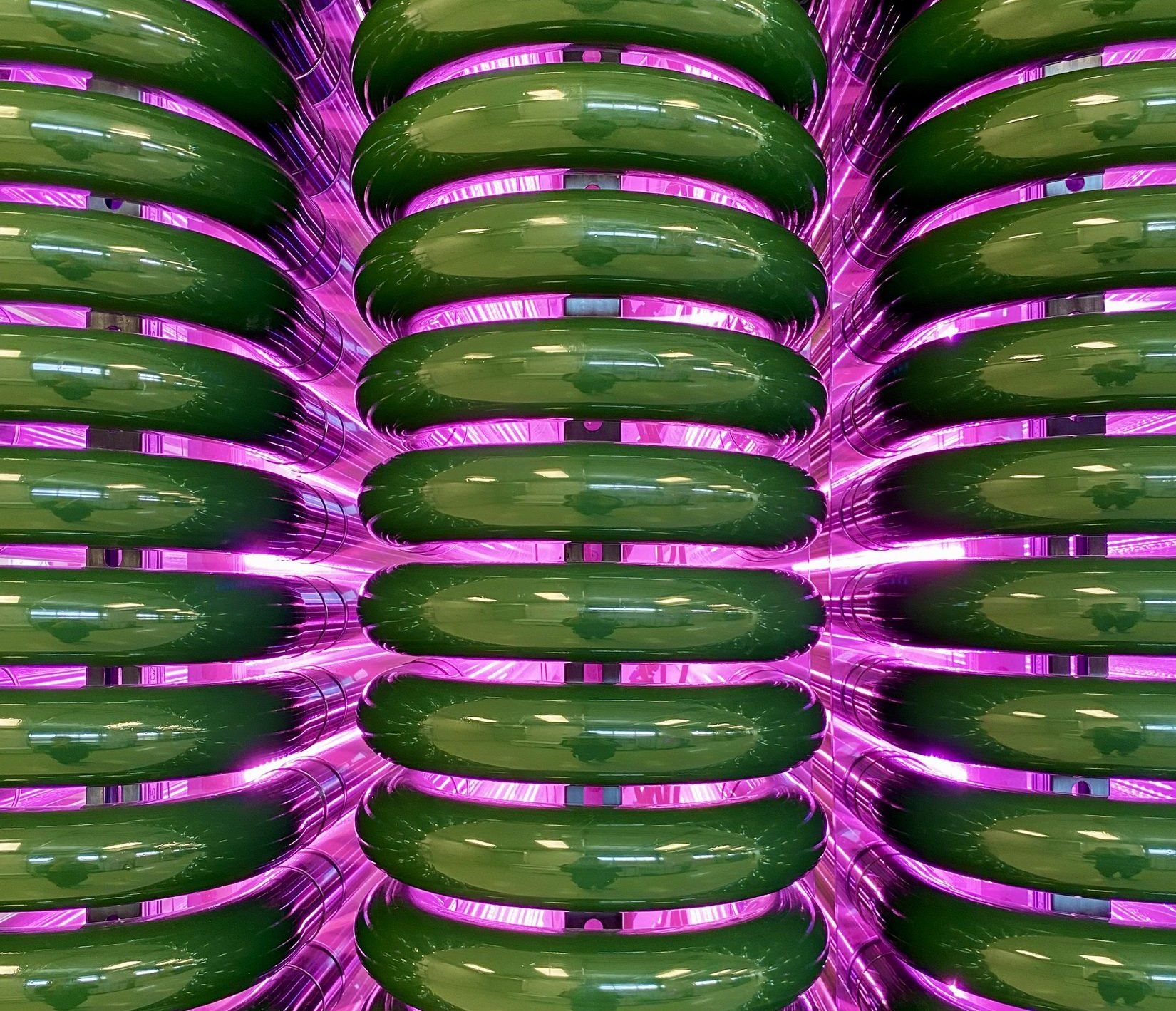
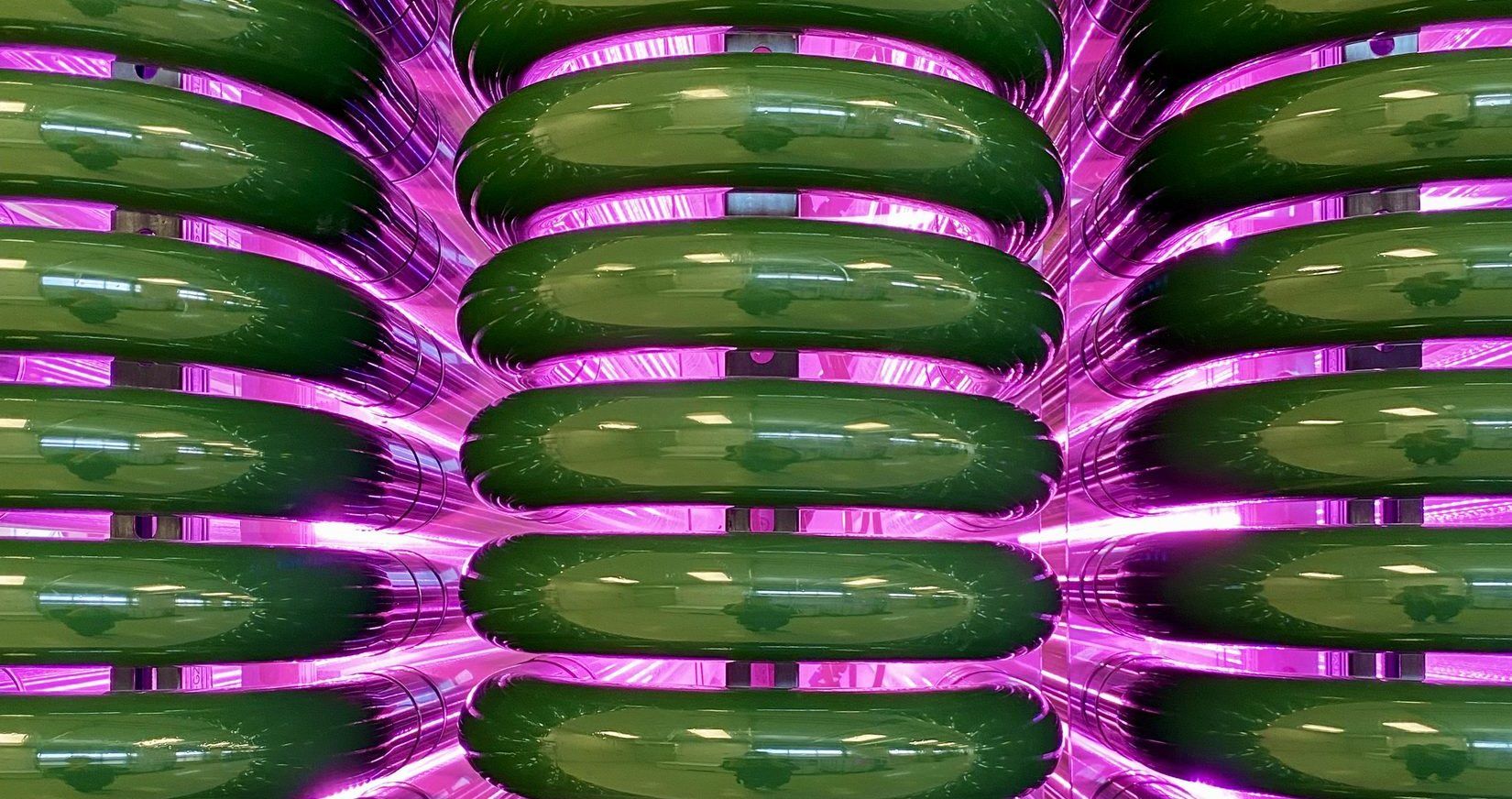
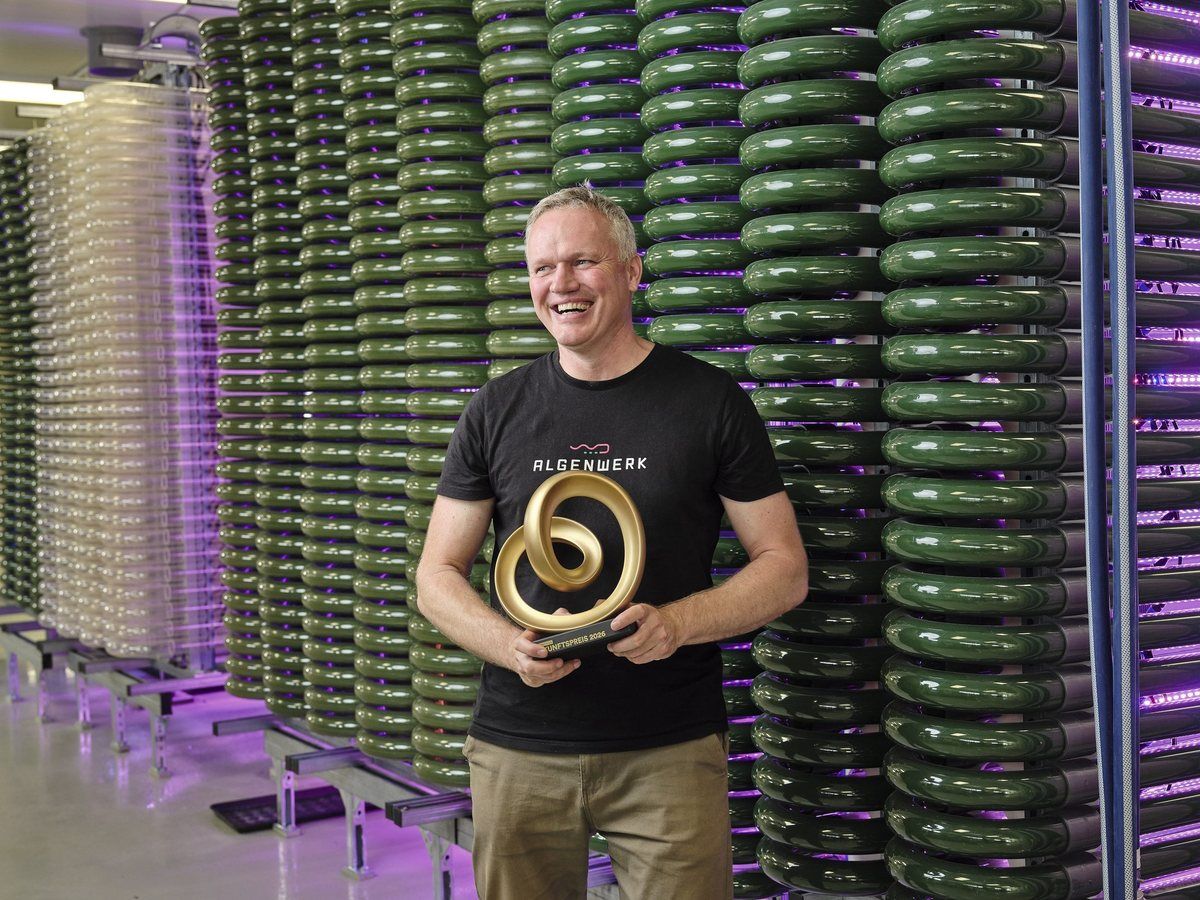
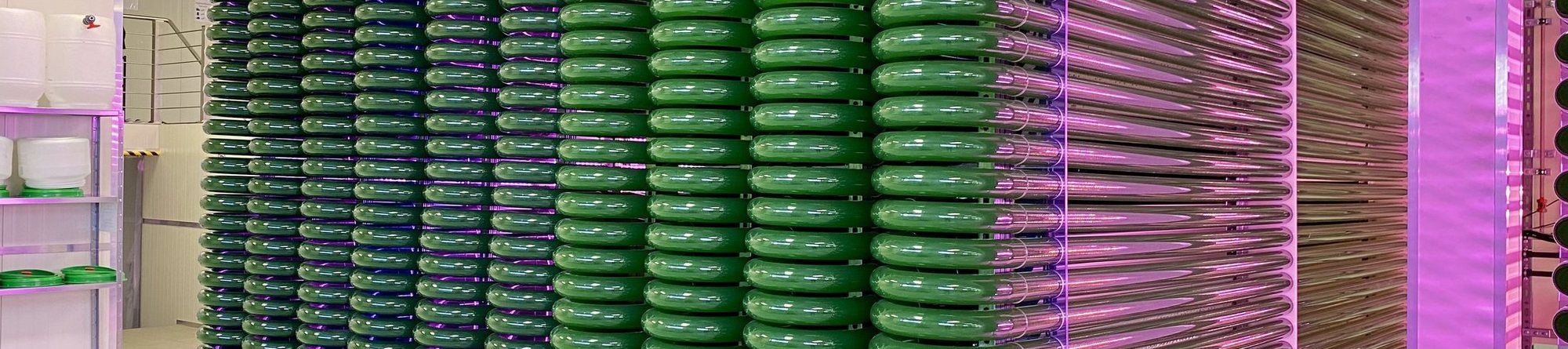
Today, most microalgae reach the market dried, as a powder. We take a different route: we cultivate spirulina in our own closed photobioreactors in Dresden and supply it fresh – undried and pure, without additives. This keeps the biomass intact as a whole: mild in taste, intense in colour, functional in the recipe.
Predictable. Year-round. Resource-efficient.
Fresh spirulina from the closed photobioreactor is independent of weather and season – and needs little water and no farmland for its cultivation.
- ≈ 52 l
- Water per kg of paste across the entire upstream chain*
- 0.13 m²
- Land per kg of paste, only indirectly in the upstream chain – no farmland for the culture*
- 365 days
- Production per year, independent of weather and season
* Life cycle assessment according to ISO 14040/44 (van Daal, Wageningen University & Research with UNU-FLORES Dresden, 2024), cradle-to-gate for the Dresden process, ReCiPe 2016: water consumption potential 0.52 m³ and land use 1.28 m²·a per kg of spirulina dry matter, converted to paste with 10% dry matter.
Resources you can measure.
Light, water, nutrients and a carbon source: that is what the culture needs. Our life cycle assessment shows what this means for your supply chain – with figures for your sustainability report and your supplier assessment.
Inputs
Water, nutrients, carbonate source, electricity
Actual Dresden process
Cultivation, harvesting, concentration, filling
Factory gate
End of the assessment
Not included in this assessment
Transport to the customer, further processing, use
Water: Water consumption potential 0.52 m³ per kg of spirulina dry matter → converted to paste with 10% dry matter ≈ 52 l per kg of paste.
Land: Land use 1.28 m²·a per kg of spirulina dry matter → converted to paste with 10% dry matter ≈ 0.13 m² per kg of paste.
What the assessment shows
The life cycle assessment according to ISO 14040/44 covers the actual Dresden process from inputs to the factory gate in 18 impact categories. Water and land are the strongest results: the reactor stands in a hall, not in a field.
What you gain
Key figures per kilogram of ingredient, with source and system boundary – for sustainability reports, supplier assessments and product communication. Plus short distances in an uninterrupted cold chain within Germany.
Where our levers are
Electricity for the lighting and the carbonate source determine the CO₂ footprint. Our lever is electricity.
Power2Food.
Using volatile renewable energy when wind and sun provide it.
We don’t say ‘climate-neutral’. We state the figures we can prove: water and land.
Source
* Life cycle assessment according to ISO 14040/44 (van Daal, Wageningen University & Research with UNU-FLORES Dresden, 2024), cradle-to-gate for the Dresden process, ReCiPe 2016: water consumption potential 0.52 m³ and land use 1.28 m²·a per kg of spirulina dry matter, converted to paste with 10% dry matter.
Talk to us about your product, your application or your own plant.
Buy the ingredient, develop products together or run your own ALGENWERK: together we will find the right way for you.
Three ways to work with ALGENWERK
- Ingredient: fresh spirulina with specification, cold chain and application support
- Co-development: develop products together
- Plant: PACT systems, processes and market access from a single source