

Knowledge about microalgae and fresh spirulina.
Short answers to frequently asked questions, key terms and sources. For anything else, just ask us.
Answered briefly.
What does fresh spirulina taste like?
Mild and fresh, almost neutral – much milder than dried biomass. This lets it blend into many recipes, even at relevant dosages, without dominating the taste.
Source: De Rijdt et al. 2025
How long does fresh spirulina keep?
The minimum shelf life is 5 weeks chilled in the unopened container; frozen, up to 12 months.
Source: Product specification
Does the colour survive heating?
Cold, the colour is largely stable up to about 45 °C. Baked, fried or roasted, it turns olive to brown – and roasted and umami notes can develop.
Source: Product brochure, For development
Does fresh spirulina contain vitamin B12?
Yes, natural vitamin B12 (cobalamin), analysed separately from pseudo-B12: 36 µg per 100 g SPIRULINA INTENSE. Analytical value of the raw product; natural variations possible.
Source: Product specification
What is on the ingredients list?
Spirulina. No additives, preservatives, colourings or flavourings.
Source: Product specification
In which pH range can fresh spirulina be used?
Its natural pH is 6–7. In recipes, it can be used from pH 4 to 8; the more acidic, the greener the colour.
Source: Product brochure, For development
How is fresh spirulina delivered?
SPIRULINA INTENSE in a 170 ml jar, 1 kg pouch or 7.5 kg film bag in a returnable container; SP!RA Essence in a 1 l stand-up pouch. Shipped exclusively in an uninterrupted cold chain at +2 to +7 °C.
Source: Product specification
How much water and land does fresh spirulina need?
According to our life cycle assessment, around 52 l of water and 0.13 m² of land per kg of paste across the entire upstream chain. The cultivation itself does not occupy any farmland.
Source: LCA according to ISO 14040/44, van Daal 2024
Is fresh spirulina vegan and allergen-free?
It is vegan, gluten-free and GMO-free and contains none of the 14 major allergens that require labelling in the EU.
Source: Product specification
What is the difference between fresh and dried spirulina?
Fresh spirulina is freshly harvested and not dried: the whole biomass comes as a paste, pure and without additives. It tastes mild and fresh, almost neutral – much milder than dried biomass – and has no powdery taste. Most microalgae, by contrast, reach the market dried, as a powder.
Source: Image brochure v4.2
What can fresh spirulina be used for?
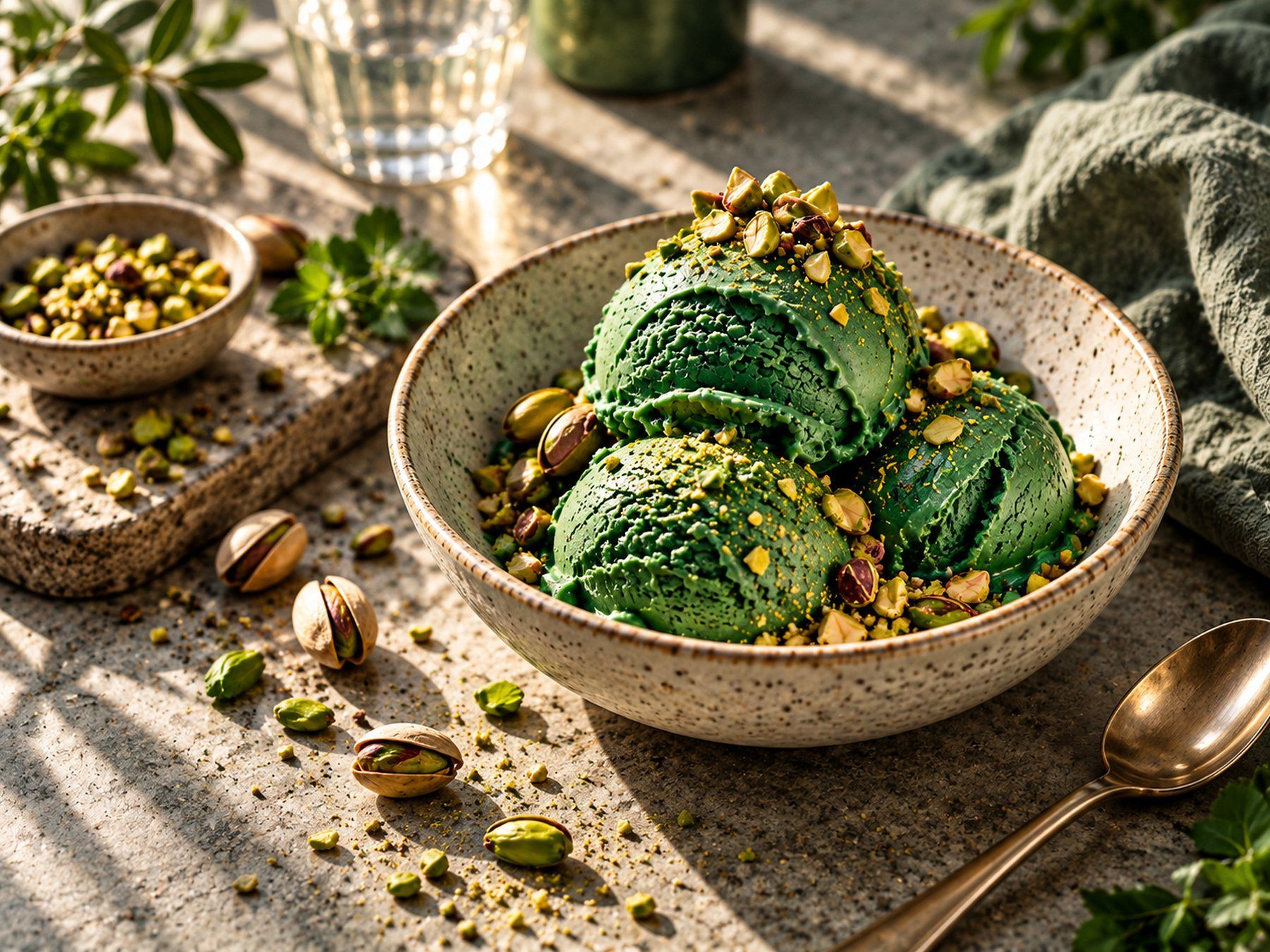
For food, beverages and cosmetics. In food, today mainly in eight categories: ice cream and frozen desserts, bakery and pasta, sauces, dips and spreads, beverages, desserts and confectionery, dairy and dairy alternatives, plant-based and savoury products, and catering and hospitality.
Source: Sales brochure v4.2
Which colours are possible with fresh spirulina?
Matrix, process and dosage determine the shade – fresh spirulina is not just green. Turquoise in a light, high-fat, cold matrix (ice cream, ganache, oat or rice base), green-blue in an aqueous, neutral matrix (drinks, dips, dressings), green to olive when acidic, baked or cooked (bread, pasta, fruit shots), olive to brown when fried, roasted or extruded – then with roasted aromas instead of colour.
Source: Sales brochure v4.2
When do I add fresh spirulina in the process?
Cold: after the last heating step; the colour is largely stable up to about 45 °C. Keep colour-intensive products protected from light. Whether to add it cold is decided by your HACCP plan.
Frozen: work in cold, then freeze promptly – the cold protects the colour. Freezing is not a substitute for a microbial reduction step.
Hot: work in before baking, frying or roasting. The colour turns olive to brown, but roasted and umami notes can develop in return.
Source: Product brochure, For development
How do I convert SP!RA Essence into SPIRULINA INTENSE?
4 g of SP!RA Essence corresponds to 1 g of SPIRULINA INTENSE. SP!RA Essence is the liquid form for beverages and shots, SPIRULINA INTENSE the paste – homogeneous, smooth, easy to dose.
Source: Product brochure, For development
How do I store fresh spirulina?
Chilled at +2 to +7 °C, protected from light and frost. In the unopened container, it keeps for 5 weeks chilled and up to 12 months frozen.
Source: Product brochure, For development
What are the nutritional values of fresh spirulina?
Per 100 g SPIRULINA INTENSE: energy 188 kJ / 44 kcal; fat 0.57 g, of which saturates 0.24 g; carbohydrate 3.3 g, of which sugars <0.1 g; fibre 1.16 g; protein 7.12 g; salt 0.1 g. Information according to the current product specification; it refers to the raw product and must be validated in the end product.
Source: Product specification
How does ALGENWERK ensure quality?
Cultivation, harvesting and filling take place at one site, Hub Dresden – in closed, highly automated photobioreactors from our own plant engineering instead of open ponds; every batch is documented. Quality management is certified according to ISO 9001, plus HACCP from culture to filling. The total aerobic count is below 10² CFU/g; spore-forming bacteria are not detectable.
Source: Sales brochure v4.2
How much fresh spirulina does ALGENWERK produce?
Hub Dresden-Hellerau currently operates with a capacity of around 20 t of fresh spirulina per year. Three further ALGENWERK plants in Brandenburg, North Rhine-Westphalia and Lower Saxony are in planning and will adopt the Dresden process.
Source: Sales brochure v4.2
Is fresh spirulina available all year round?
Yes. The closed photobioreactor produces 365 days a year, independent of weather and season. Delivery takes short routes within Germany in an uninterrupted cold chain – with no import risk.
Source: Image brochure v4.2
Is fresh spirulina from ALGENWERK climate-neutral?
We deliberately don’t say so. The CO₂ footprint is determined by the electricity for the lighting and the carbonate source. Our lever is electricity: using volatile renewable energy when wind and sun provide it (Power-to-Food). What we can prove is water and land: according to our life cycle assessment, around 52 l of water and 0.13 m² of land per kg of paste across the entire upstream chain.
Source: LCA according to ISO 14040/44, van Daal 2024
How do I get samples and a specification?
Via the contact form with the subject ‘Samples & specification’. You will receive samples with specification and product data sheet; on request, recipe suggestions from the ALGENWERK recipe lab, a kitchen induction or a pilot-plant session at Hub Dresden, and a cost and nutrition calculation for your end product.
Source: Sales brochure v4.2
Can I run my own ALGENWERK?
Yes, as a production partnership: PACT systems, processes and market access from a single source – from reactor to market. Every new plant adopts the process developed at Hub Dresden. Contact us via the contact form and choose the subject ‘Your own ALGENWERK’.
Source: Image brochure v4.2
What we mean.
- Blue Food
- Food from aquatic production – produced regionally, grown under controlled conditions, delivered through the cold chain.
- CFU/g
- Colony-forming units per gram, a measure of the microbial count. Fresh spirulina from ALGENWERK: total aerobic count <10² CFU/g.
- Clean label
- A short, understandable ingredients list without additives. For fresh spirulina, it simply reads: spirulina.
- Cradle-to-gate
- System boundary of a life cycle assessment: from the inputs to the factory gate.
- Fresh spirulina
- Freshly harvested, undried whole biomass – pure, without additives, delivered through the cold chain.
- HACCP
- Hazard Analysis and Critical Control Points: a food safety concept that analyses hazards in the process and controls them at critical points. At ALGENWERK, from culture to filling.
- Hub Dresden
- ALGENWERK’s site in Dresden-Hellerau. Cultivation, harvesting, filling and application development take place here under one roof. More →
- ISO 9001
- International standard for quality management systems. ALGENWERK’s quality management is certified to it.
- Life cycle assessment (LCA)
- Assessment of a product’s environmental impacts according to ISO 14040/44. For fresh spirulina from ALGENWERK, carried out on the actual Dresden process, cradle-to-gate, in 18 impact categories. More →
- Natural vitamin B12
- Vitamin B12 in the form of cobalamin. At ALGENWERK, analysed separately from pseudo-B12.
- PACT photobioreactor
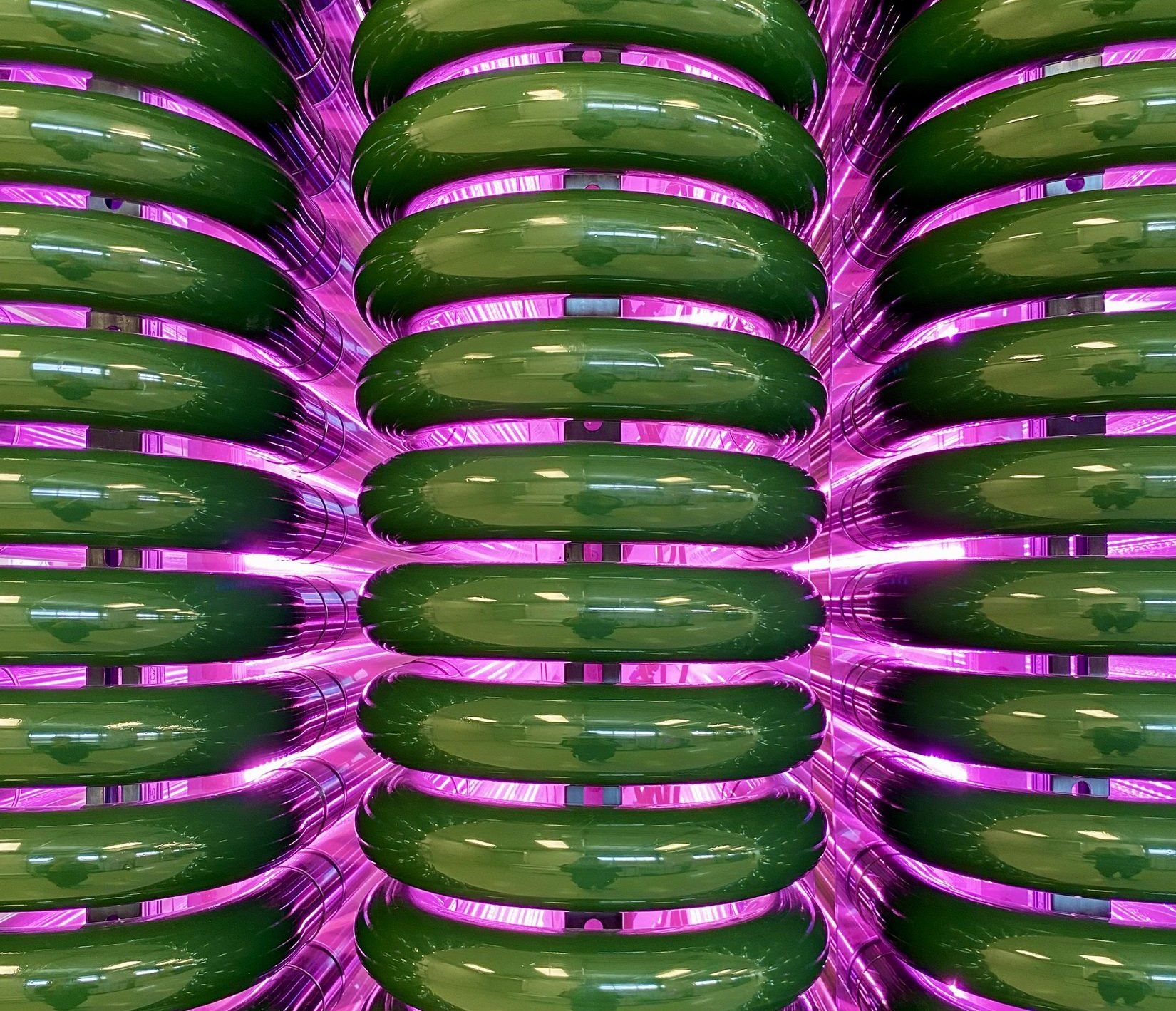
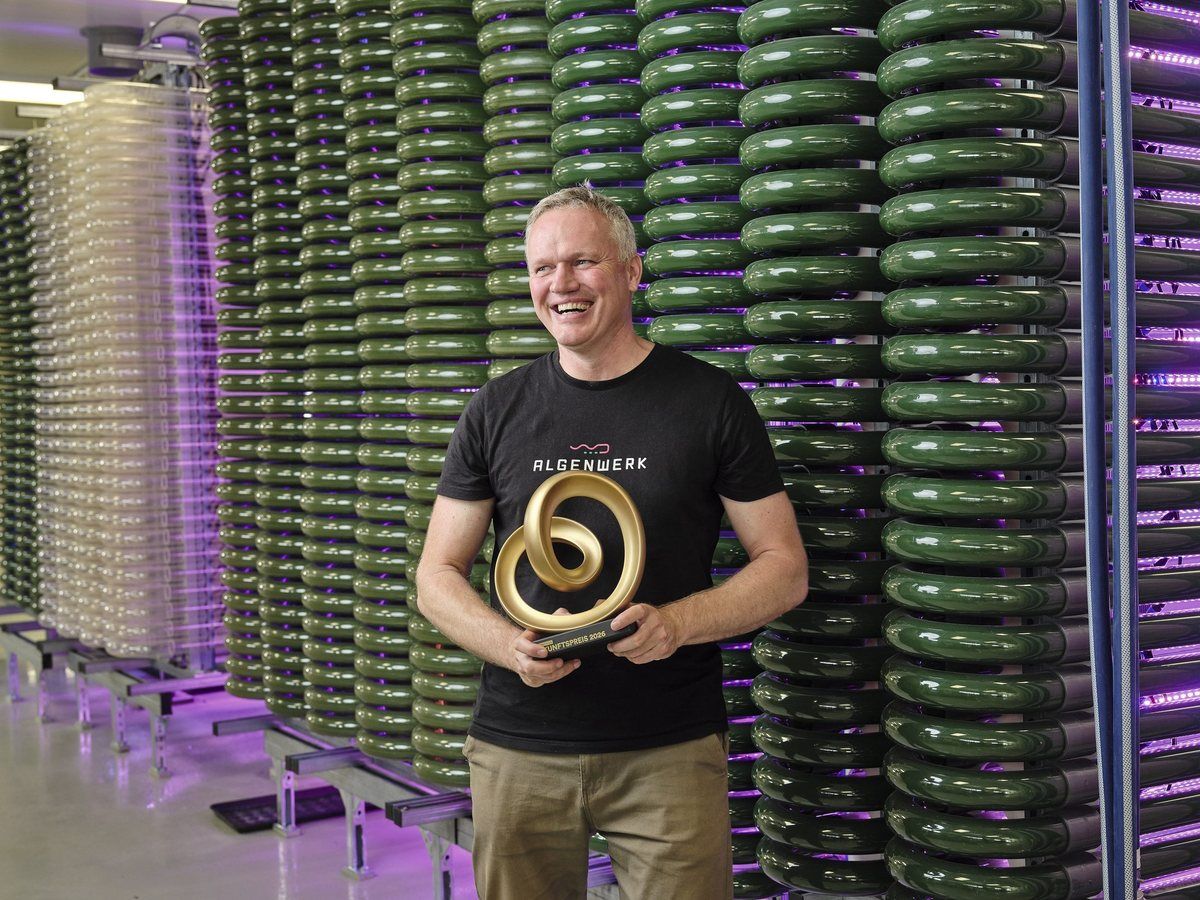
- The photobioreactor design from ALGENWERK’s own plant engineering: closed, illuminated, highly automated. Run via our own fully automated process platform. More →
- Photobioreactor
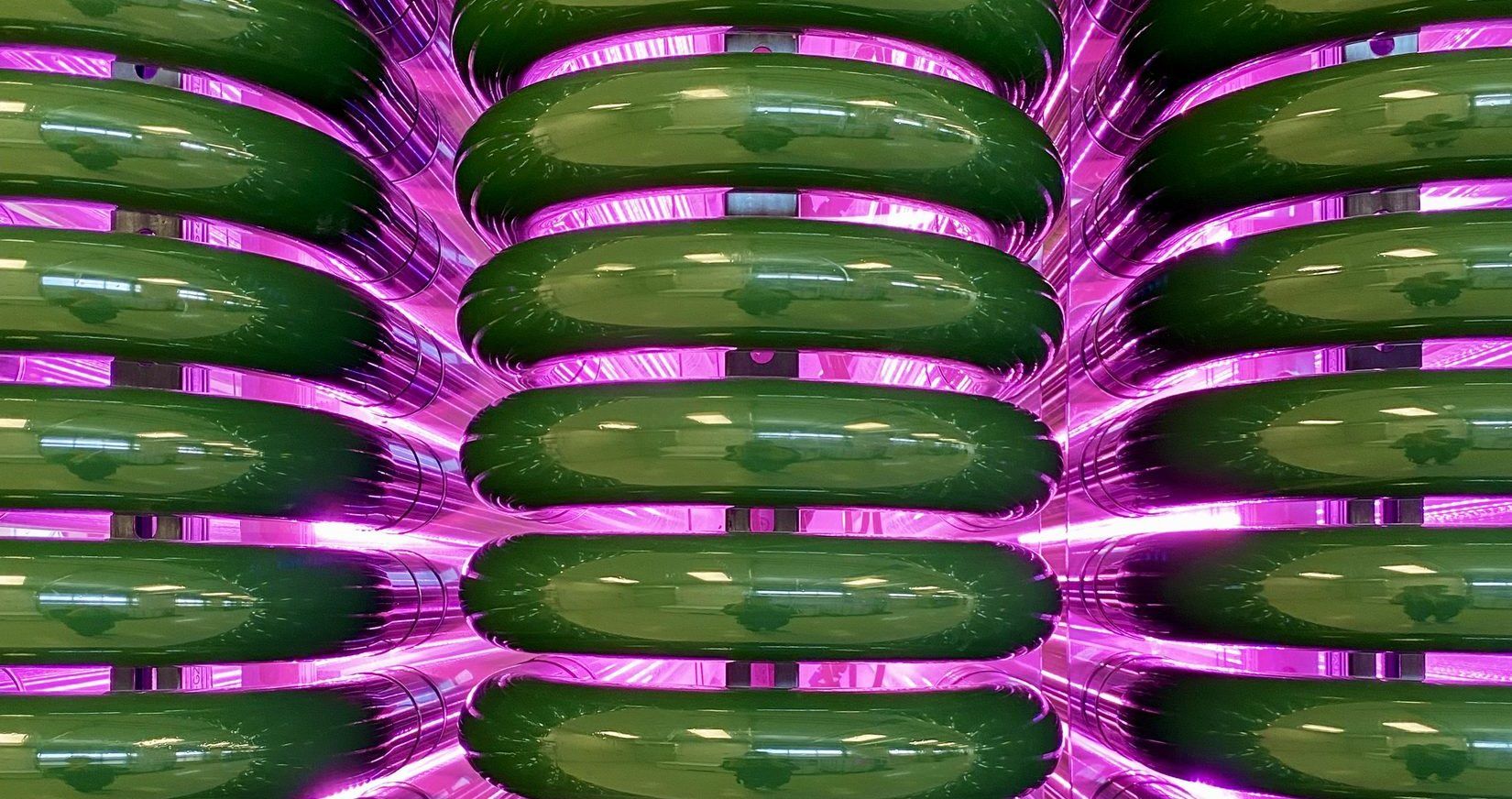
- Closed, illuminated system for cultivating microalgae. At ALGENWERK: PACT photobioreactors developed in-house.
- Power-to-Food
- Using volatile renewable energy when wind and sun provide it. For ALGENWERK, the lever for the CO₂ footprint.
- Recipe lab
- ALGENWERK’s application development at Hub Dresden. It provides recipe suggestions and supports customers all the way to a market-ready recipe. More →
- SP!RA Essence
- The liquid form of fresh spirulina for beverages and shots. 4 g of SP!RA Essence corresponds to 1 g of SPIRULINA INTENSE.
- Spirulina (Limnospira maxima)
- Microalga that ALGENWERK cultivates in closed, illuminated photobioreactors in Dresden.
- SPIRULINA INTENSE
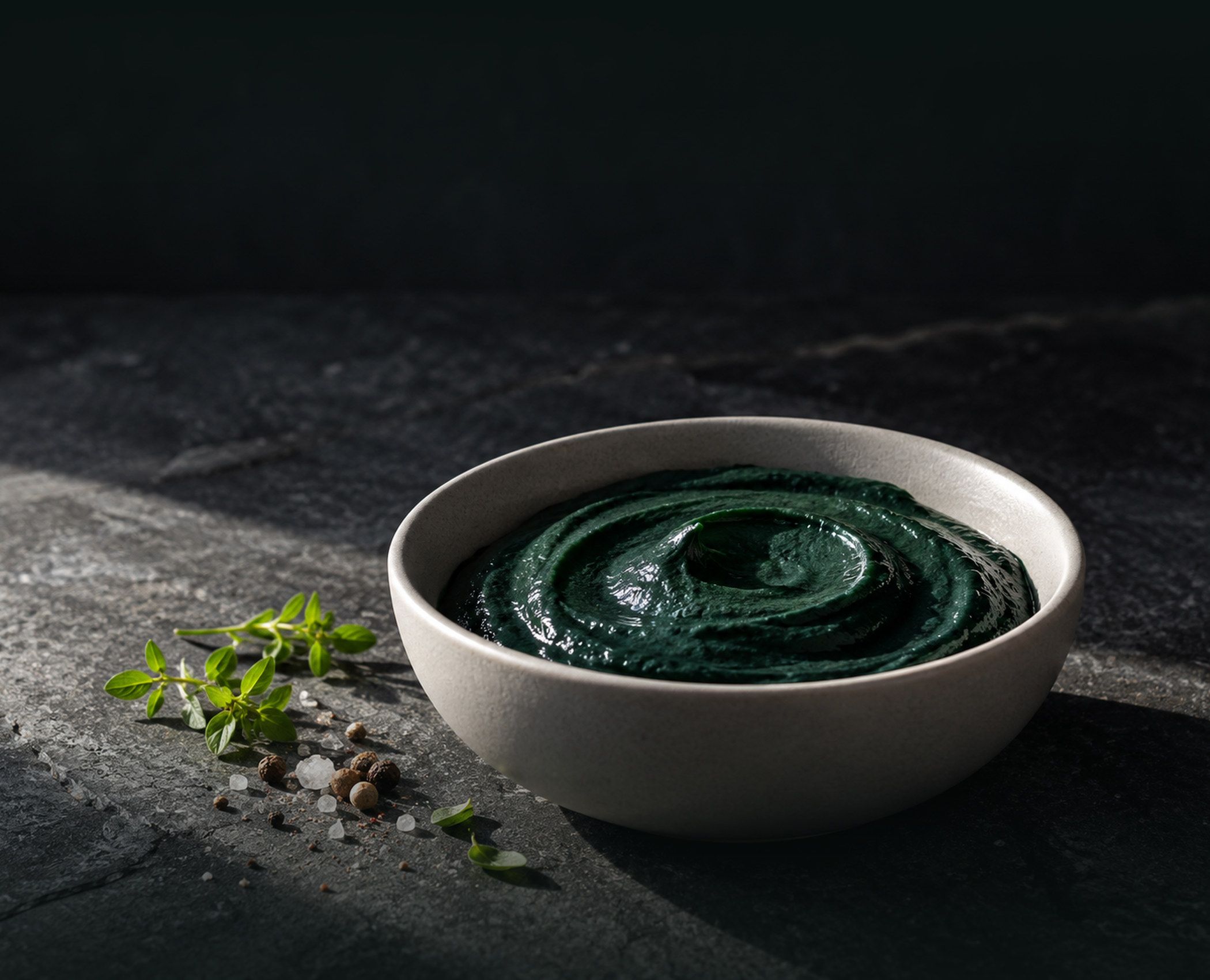
- The paste form of fresh spirulina: homogeneous, smooth, easy to dose, viscosity approx. 5,000 mPa·s.
- Whole biomass
- The complete algal biomass instead of an extract or isolate. Fresh spirulina from ALGENWERK is supplied as whole biomass, undried and pure. More →
Sources
- Life cycle assessment according to ISO 14040/44 (van Daal, Wageningen University & Research with UNU-FLORES Dresden, 2024), cradle-to-gate for the Dresden process, ReCiPe 2016: water consumption potential 0.52 m³ and land use 1.28 m²·a per kg of spirulina dry matter, converted to paste with 10% dry matter.
- Taste: De Rijdt et al. 2025.
- ALGENWERK product specification and product data sheet for SPIRULINA INTENSE and SP!RA Essence, current version.
- ALGENWERK sales brochure Core v4.2 (in German), page 6 ‘Für die Entwicklung’ (For development).
- ALGENWERK sales brochure Core v4.2 (in German), as of 8 October 2026.
- ALGENWERK image brochure v4.2 (in German), as of 8 October 2026.
Nutritional, B12 and shelf-life information refers to the raw product and must be validated in the end product.